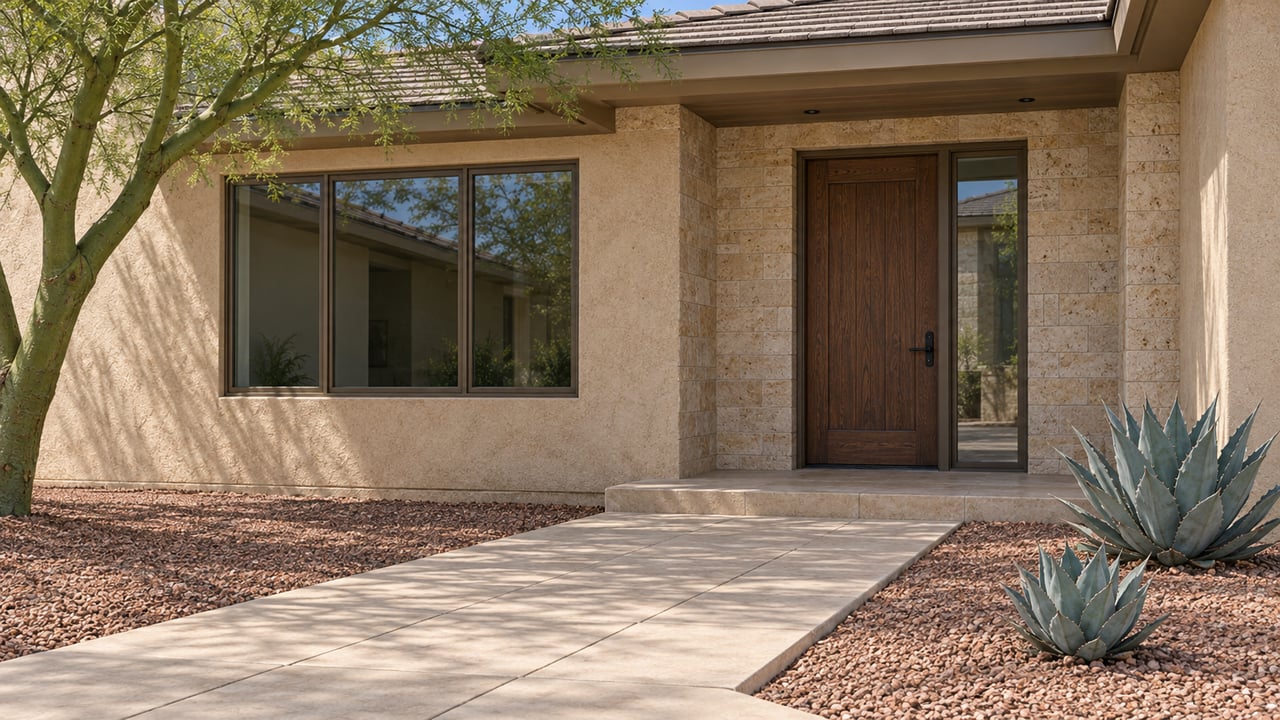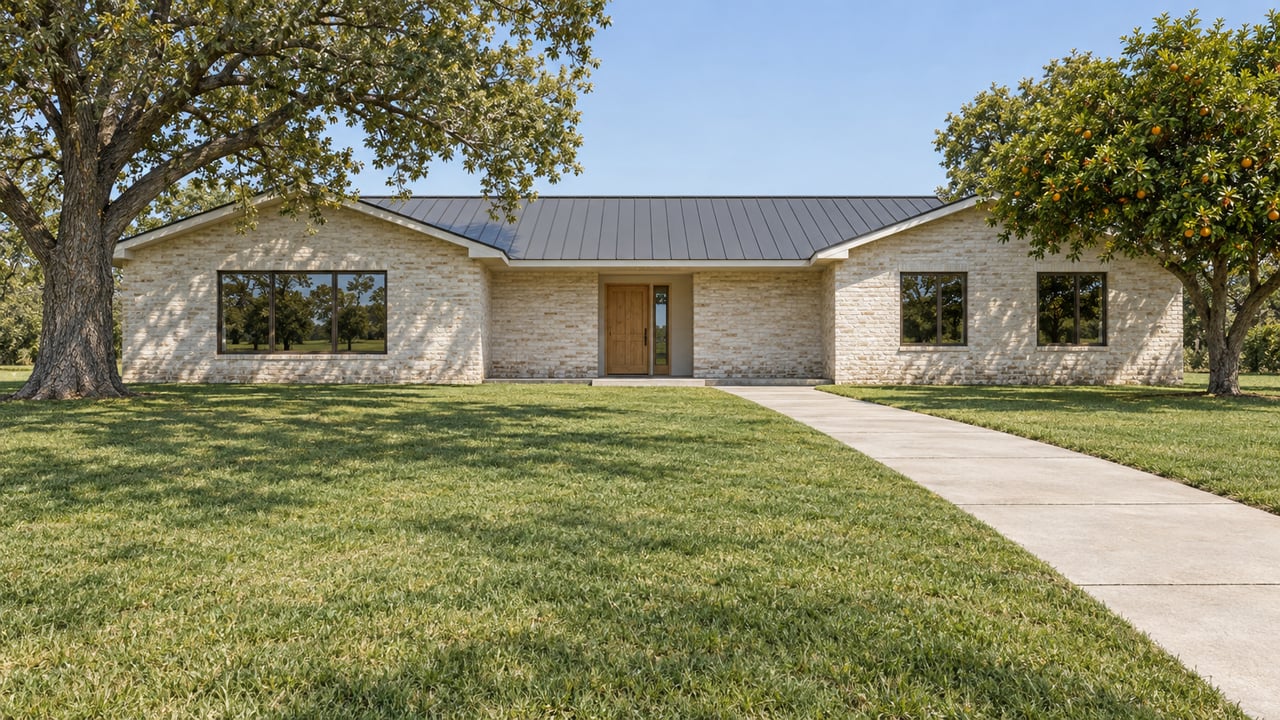
If an Arcadia seller checks "Yes" next to Flood Irrigation on the disclosure form, what has the buyer actually been promised? That depends on which provider serves the parcel, whether its membership or account is current, and whether anyone has torn out the pipes since the last delivery.
The pipes matter most in a neighborhood built on teardowns and rebuilds. The right to irrigation water in Arcadia goes with the land. The means to take that water lives in the yard, and a bulldozer can remove it in an afternoon.
What the Disclosure Form Records
The Arizona REALTORS® Residential Seller's Property Disclosure Statement has a section headed "Does the property currently receive the following services?" It lists Flood Irrigation with yes and no boxes and a field for the provider's name. The February 2023 version is still the one listed on the Arizona REALTORS® residential forms index.
A checked box and a provider name are a good start. They don't tell you the water source, how much it costs each year, who owns the pipe under the side yard, or whether the valve at the property line still works. The same form's advisory tells buyers to verify information themselves and to review title reports, surveys, CC&Rs and association bylaws. In Arcadia, the provider name can tell you whether the lot is on a neighborhood system that pumps its own water.
Arcadia Water Company Runs Its Own System
Arcadia Water Company is an Arizona nonprofit incorporated in 1919 to supply irrigation water to its members only. It owns its own wells, a pumping plant, a reservoir, the main distribution lines and the main diversion boxes. An elected 11-person board runs it, and the annual meeting falls on the third Tuesday of April. A July 2022 newsletter of the Arcadia Camelback Neighborhood Association explains that the company was formed to water the citrus groves that once covered the area south of Camelback Mountain. Since then it has dug and maintained local wells and pumped that water through its pipes to provide flood irrigation.
SRP's flood irrigation works differently. Its water moves by gravity through SRP canals, and SRP zanjeros operate it only as far as an SRP delivery gate. Past that gate, neighborhood channels, ditches or pipes carry the water to individual homes, and the irrigating customers own and maintain them.
| Arcadia Water Company | SRP | |
|---|---|---|
| Water source | Company-owned wells, pumped through company mains | Canal water delivered by gravity |
| Who gets service | Members whose land is in the AWC district | Account holders on parcels inside SRP's service territory |
| How deliveries get scheduled | AWC posts schedules by address, with start and end times | Customers place orders through My Account, the SRP Water app or (602) 236-3333 |
| Posted cost | $100 membership fee, plus any water, delivery and repair charges | Annual charges, with no fee per delivery |
| Private system | Members or their HOA own and maintain the sub-distribution lines | Customers own and maintain everything past the SRP delivery gate |
AWC's Group A schedule for October 12 through 15, 2026 shows how fine-grained its system is. It assigns delivery windows to individual addresses on streets from 45th Place to 68th Street, including Arcadia Drive and Arcadia Lane. Some windows last 15 minutes and others more than four hours. A few entries carry an "On Hold" status. AWC can tell a buyer what that status means for a particular parcel.
The neighborhood name doesn't tell you whether a parcel sits inside AWC's district. AWC can confirm membership for a specific lot, and SRP points property owners to its service-territory lookup before they set up an account.
Teardowns Take Out the Irrigation Hardware
On paper, AWC ties the water right to the land. Owners of land in its district "own the rights to the water conditioned on the payments of AWC's membership fee of $100," along with any charges for water, delivery service or repair, and subject to the company's rules on service and suspension. So the right comes with the parcel, but using it depends on payments being current.
The physical system is the bigger problem, and AWC has described it plainly. In the neighborhood association newsletter, the company reported a steady loss of trees and of irrigation requests over the past couple of decades, and it explained why:
"As housing stock was regenerated, new houses were built by blading the property, not just sacrificing trees, but also the berms, valves, and landscaping needed to control the irrigation water, and, sadly, often removing the water lines themselves."
That sentence matters most to anyone buying a new build or a deep remodel in Arcadia. A lot can sit inside the AWC district and still have no working way to take the water. The SPDS asks whether the property currently receives flood irrigation. A newly finished house that hasn't had a delivery since the rebuild may get a different answer than the ranch home it replaced.
SRP's rules put the same responsibility on the owner. Its residential owner's manual says customer responsibility begins at the SRP delivery gate, and irrigators must maintain the private system and give reasonable access to control structures. SRP's newest reinvestment in aging neighborhood systems is a Community Irrigation Revitalization Initiative that, as KJZZ reported in April 2026, began with a pilot in South Phoenix. Arcadia wasn't named in that story. On AWC's system, the lines inside subdivisions belong to members or their HOA.
Delivery Also Depends on Lines Outside the Lot
AWC's mains are part of the picture too, separate from anything on the lot. In a July 23, 2020 post, the company wrote that its distribution lines "are aging and problems are occurring." One of the two main lines under Camelback Road broke over the July 4th holiday weekend. Repairs waited on City of Scottsdale approvals to close part of Camelback Road. The fix also needed a specially made sleeve and clamps that no supplier in Arizona could provide, so the parts were ordered from Texas and installed on July 22.
A property's irrigation history depends partly on shared infrastructure beyond its lot lines, so it's reasonable to ask the provider about recent service along with checking the parcel's own equipment.
What the Annual Bill Looks Like on an SRP Lot
SRP doesn't charge landowners with water rights for each delivery. Annual basic charges pay for SRP facilities, an annual delivery fee covers account administration, and extra charges apply when use goes past the account's base allocation. SRP's residential charge summary, issued March 2026, lists these amounts for calendar year 2027, which are still subject to annual Board approval:
- 0.20-acre lot: $166.00 total annual charge
- 1-acre lot: $440.65 total annual charge
- Active-account delivery fee: $93.87 in 2026, rising to $97.34 in 2027
- New account: $25.90
- Name change: $8.10 per deed
The per-deed name-change fee shows that SRP expects the account to be updated at every sale. Residential subdivisions on SRP are generally scheduled about every 14 days in summer and every 28 days in winter, except during annual canal maintenance. Some neighborhoods also form an Irrigation Water Delivery District. That is a county special taxing district that pays for upkeep of the neighborhood system through Maricopa County property assessments, with homeowners electing trustees. If a parcel sits in one, that assessment belongs in the buyer's carrying-cost math.
Confirming It Before Closing
The parcel's documents and its physical condition answer different questions, so check both:
- Name the provider in writing. Get the provider from the SPDS, then confirm it directly. For SRP, check the service-territory map and confirm the account and allocation. SRP bases maximum order allocation on acreage and water rights. For AWC, contact the office at 7000 E. Via Soleri in Scottsdale, at 480-945-4621 or [email protected].
- Confirm the account is in good standing. Ask whether membership is current, whether any charges are owed and whether any hold applies to the parcel.
- Walk the system. SRP's guidance covers berms for erosion and low spots, ditches and grates for debris, cracked or broken pipe, and valves, gates, ports and standboxes for damage or poor seals. SRP says berms should be 12 to 18 inches wide and 3 inches higher than the most water the property will hold. It also warns that porous block walls can let water through and be damaged unless they're sealed or protected by a berm. On SRP lots, a Field Services Liaison can do a free system walkthrough.
- On a new build, look for the hardware itself. Look for a working valve, an intact line and berms. AWC's own account of rebuilds that removed all three is the reason to check.
- Ask about access. SRP's manual says irrigators must give reasonable access to control structures, and it doesn't settle access rights on any particular lot. Questions about who may cross a yard to reach a valve belong with a title or legal professional.
All of this is general information about how these systems work, not legal, tax or financial advice. Confirm your own parcel's rights, obligations and costs with the provider and the right professional.
FAQ
Does flood irrigation transfer automatically when an Arcadia home sells? With AWC, district landowners own the water right, but it depends on the $100 membership fee, any other charges and the company's rules. With SRP, the 2027 schedule lists an $8.10 name-change fee per deed, so the account has to be updated after closing.
Is AWC water the same as SRP water? No. AWC pumps water from wells it maintains, while SRP delivers canal water by gravity.
Who fixes a broken pipe between the main line and my yard? On AWC, members or their HOA own and maintain the sub-distribution lines. On SRP, everything past the delivery gate belongs to the irrigating customers.
When we represent a buyer on an Arcadia lot, irrigation goes on the diligence list alongside the inspection. We confirm the provider, check the account status and walk the berms and valves before contingencies run out. If you're selling, we make sure the disclosure matches what the lot can actually deliver. Talk to Jonny West Real Estate before you write or accept an offer. Schedule a free consultation.